

Floors don’t fail on the shelf. Something goes wrong when steps get skipped. No moisture testing, uneven subfloors, using the wrong adhesive, rushing the installation and an unreliable warranty are a couple of common issues.
If you want your floors to look good in a few years, you have to hire the right contractors alongside choosing the right product. At Wildcat Flooring, our certified flooring installers and clear warranties are designed for Lexington life. Let’s get into the importance of certified installers and warranties.
Certified Installers: The Difference You Can’t See Until It Fails
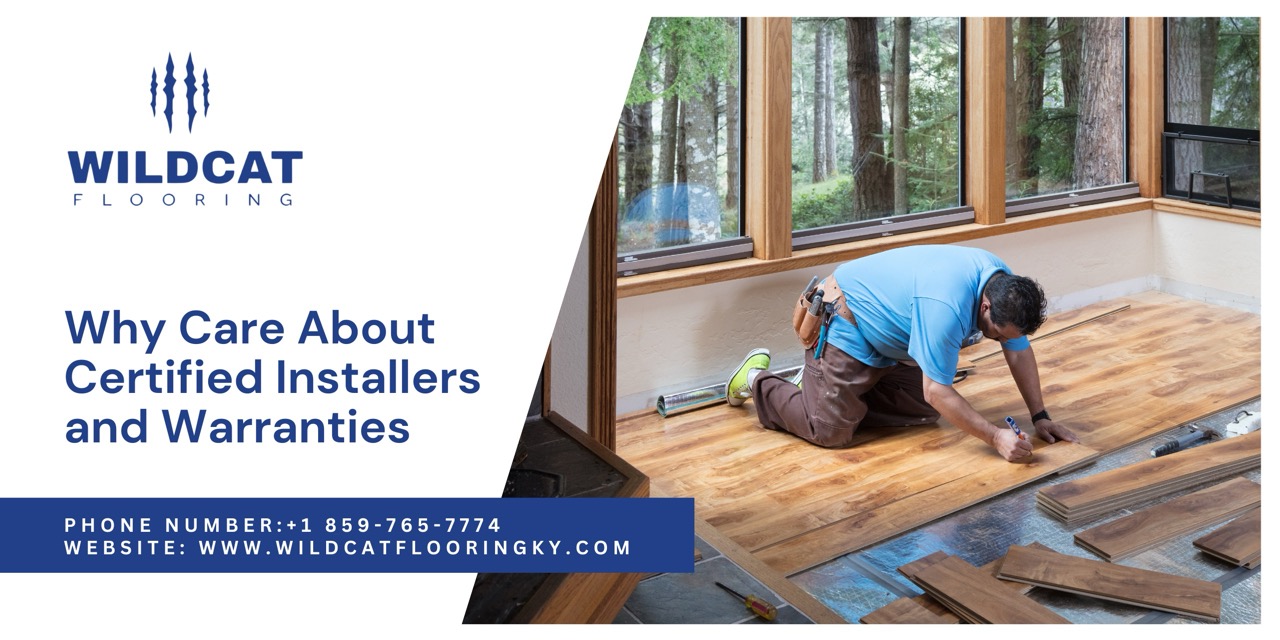
Our Certified flooring experts in Lexington, KY are trained and tested on manufacturer standards. In other words, acclimation, expansion gaps, flatness tolerances, adhesives, underlayments and fastening patterns actually mean something to them. They also understand material-specific rules for engineered hardwood, LVP/LVT, laminate as well as porcelain and ceramic tile. In Central Kentucky, seasonal humidity and basement living mean moisture testing and vapor control aren’t “nice to have”, they’re table stakes.
Hiring a group of professionals helps prevent common problems like cupping, peaking, hollow spots, squeaks, gapping and crooked seams. In most cases, this is preventable with the right prep work, don’t underestimate the importance of moisture readings, leveling to spec, using the correct trowel notch size and proper expansion. Skip those steps and you’ll pay twice!
Minor misses like skipping a moisture test can cause frustration later. We spec and document every step so your floors perform at their best and your warranty remains valid.
Debating whether or not to test your slab or crawlspace? Book an in-home consultation and our team will check moisture and flatness before you spend a dollar.
What Warranties Actually Cover (and What They Don’t)
Warranty coverage consists of multiple layers. When you’re looking into your documentation, keep an eye out for the following:
- Manufacturer (Product) Warranty: This covers factory defects and finish, but only if installed to specifications (site readings, flatness, approved materials, acclimation).
- Installation (Labor) Warranty: Provides coverage for craftsmanship issues like peaks, gaps, hollow spots and loose transitions when the installer offers it.
- Site/Condition Requirements: Moisture limits (wood, concrete), subfloor flatness (e.g., 3/16 in 10 ft), correct underlayment/adhesive, acclimation logs, temperature/RH ranges.
Let’s bust some common myths about flooring warranties! Be aware of the following:
- “Every installer has the same warranties.” Unfortunately, this isn’t true, uncertified installs can void warranty coverage.
- “Lifetime warranty covers everything.” Even the most extensive warranties have limits. Exclusions like water intrusion, pet damage and improper cleaners matter more than the headline.
Want a warranty that actually covers what you need? We put coverage terms on your quote and keep installation photos and meter readings on file so claims are straightforward.
The Real Risks of Non-Certified Installs
While installing your own flooring or hiring an uncertified installer might seem cheaper upfront, it’ll cost you more later. Here’s what you need to know:
- Hidden Costs: Releveling, resetting stairs and new trims and thresholds get added to the project after you’ve already paid.
- Time & Stress: You’ll get stuck with call centers, finger-pointing and “not covered” emails instead of clear, honest communication.
- Resale Impact: Peaks squeaks and shade mismatches are all things buyers notice when it’s time to sell.
- Voided Warranties: Without any documentation, you won’t get the help you need.
Certified installers follow a reputable checklist. In most cases, this prevents the vast majority of call-backs and keeps your investment protected.
Your Pre-Buy Checklist (Use This Before You Signs)
Before you buy your flooring, keep a few things in mind. Here’s a checklist you can use as a guide:
- Subfloor Plan: Will you correct flatness and record moisture? Is a vapor barrier required?
- Installer Credentials: What certifications do they hold? Who is actually coming to your house?
- Product Match: What wear layer (mil), core type, finish system do you need? For example, slip resistance is good for mudrooms, while underlayment acoustics are great for second floors.
- Warranty in Writing: You should have an outline of product and labor terms, response times and who to call if something goes wrong with your flooring.
- Documentation: Keep photos, moisture/flatness logs and acclimation records on file.
Looking to purchase new flooring for the basement, kitchen or bathroom? Verify site conditions, pick the right systems and map the trims upfront. Book a free in-home estimate with Wildcat Flooring and we’ll walk you through it step by step.
Certified installers and Warranties lead to Fewer Surprises and Longer-Lasting Floors
Flooring should fit your life and stay that way. A certified flooring company with professional installers protects your budget and timeline, while real warranties protect your floors for the future. At Wildcat Flooring, we understand the difference between flooring that looks great on install day and flooring that still looks great years later. When you hire us, you get certified installers and warranties that protect your investment.
Ready for your new floors? Contact us to book an in-home consultation!