

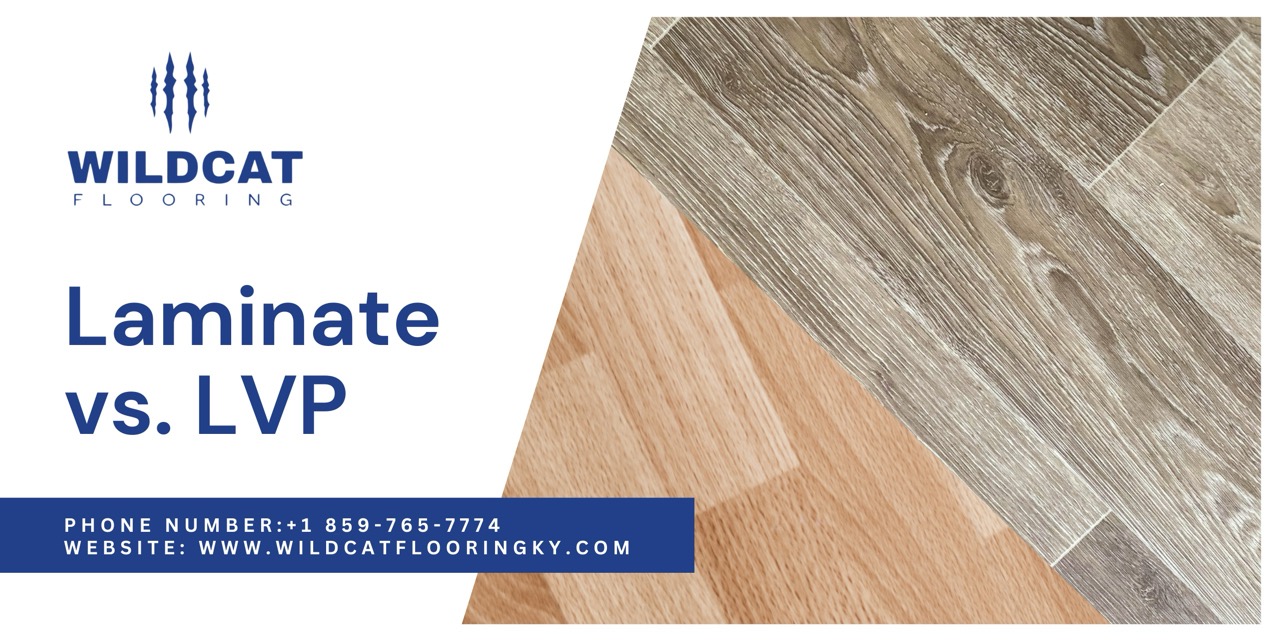
When homeowners are on the hunt for “wood-look floors,” laminate and luxury vinyl plank (LVP) come up in conversation. They both look sharp and are easy on the budget. However, they’re built differently, which means they perform differently in real life.
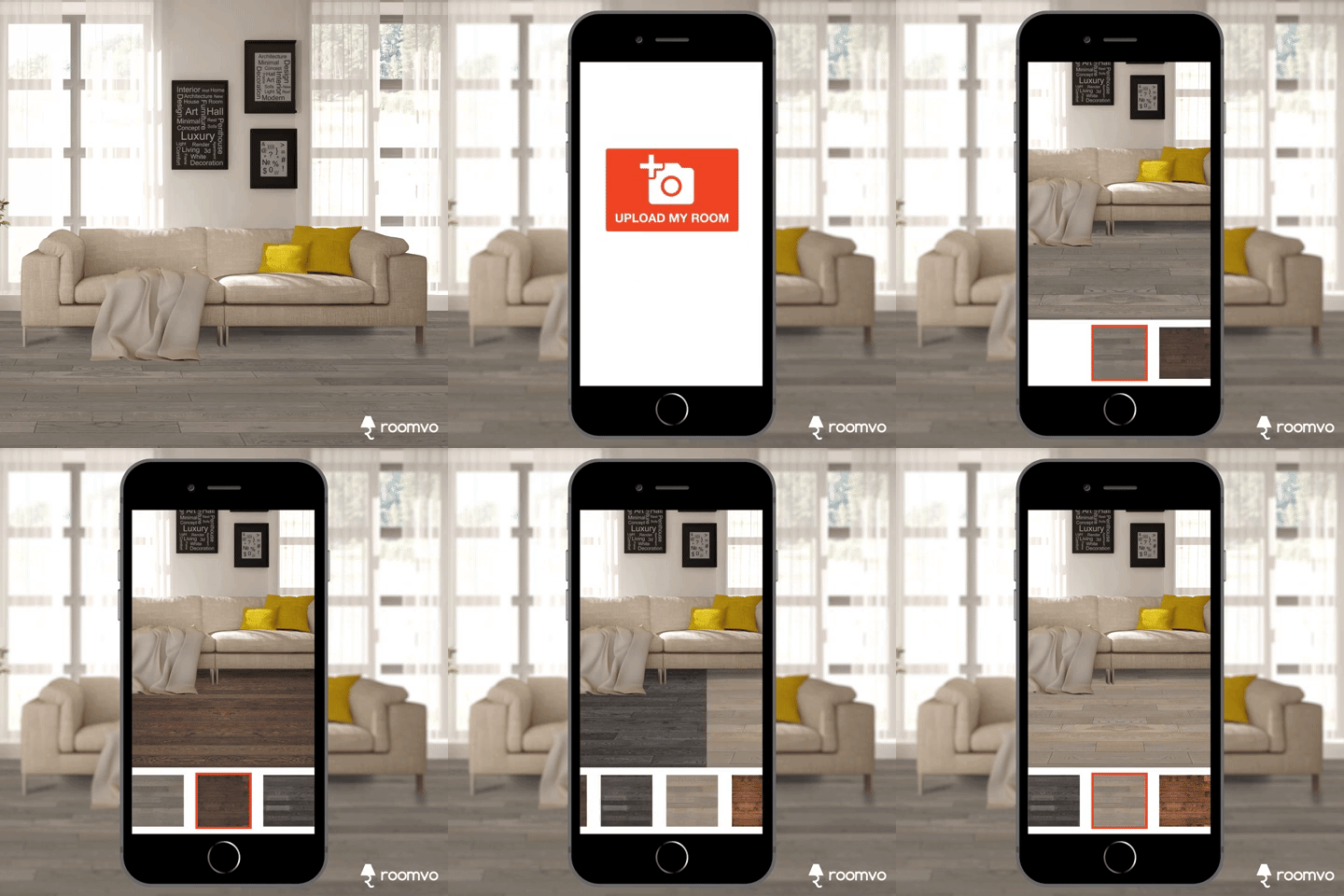
At our flooring showroom in Lexington, KY, we don’t guess from a shelf. We line up options in your home, under your lighting, next to your trim and cabinets so you can see what works and what doesn’t. Here’s a fresh, plain-English breakdown to help you make a confident decision.
What Separates Laminate from LVP?
Laminate has a wood-based core that’s pressed under heat, topped with a printed image layer and a protective wear coat. While some styles are water-resistant, it works best in dry rooms where you want a wood look without breaking the bank on hardwood.
LVP is a vinyl-core plank with a durable core and a textured wear layer. Many offer waterproof surfaces that are ideal for busy homes and moisture-prone areas.
In short, laminate has a wood core and can be water-resistant, while LVP has a vinyl core and provides waterproof options.
How They Hold Up Day to Day
Moisture is a huge deciding factor when choosing flooring for your Lexington home. Here’s a breakdown of how each flooring material stands up to daily wear:
- Laminate: It handles scuffs and everyday traffic well, but standing water can cause problems. Spills that linger, over-wet mopping or laundry leaks can cause the edges of the planks to swell.
- LVP: This flooring material is built with spills, splashes and humidity in mind. Kitchens, bathrooms, basements and muddy back entries are where it thrives.
Want a natural “wood” look without the upkeep? LVP comes out on top. Not sure if your room is moisture-prone? We’ll moisture-check your space when you book a free in-home consultation.
Cost Today vs. Value Over Time
When you choose laminate or luxury vinyl plank, you aren’t going to break the bank. Both materials save you money in different ways. Here’s an overview:
- Laminate: Going this route will keep material costs down, which is ideal for refreshing living rooms, bedrooms and hallways.
- LVP: While the initial costs are a little higher, waterproof construction prevents moisture-related repairs in kitchens, baths, basements and busy entryways, saving you headaches down the line.
Laminate tends to stretch dollars in dry zones and costs less upfront. Meanwhile, LVP is a better long-term investment for when life gets messy.
Install and Upkeep (No Drama Required)
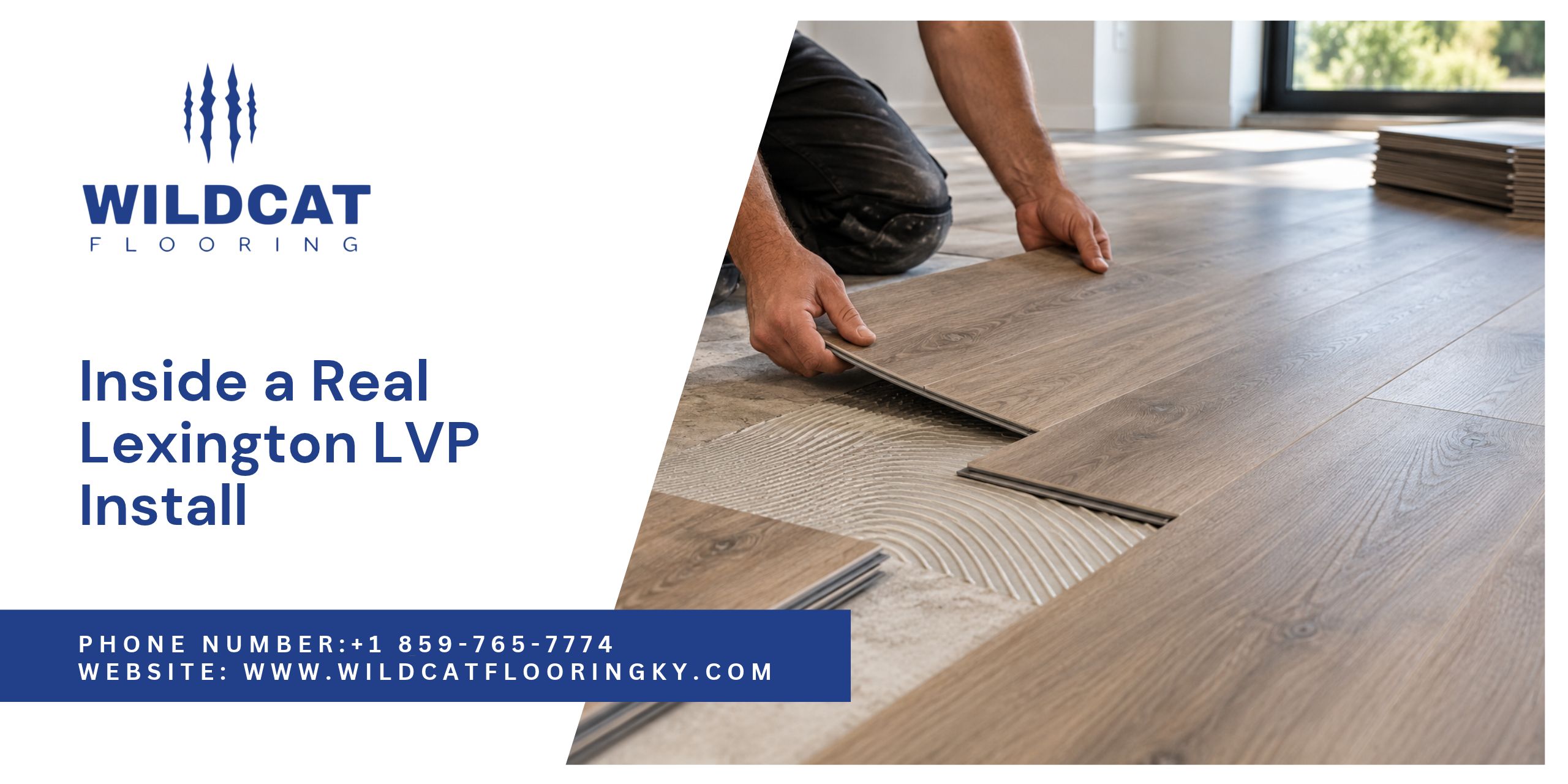
Both options install quickly as floating click-and-lock floors, all you need is a flat, prepped subfloor. Here’s how to care for each flooring material:
- Laminate Installation: Laminate floats over a foam or attached underlayment rather than being nailed or glued down, so it typically goes in faster than solid hardwood. It’s a good fit for basements and rooms where you want a shorter installation timeline, though it still needs an acclimation period and a flat subfloor to lock together properly.
- Laminate Care: Sweep or vacuum and damp (never wet) mop with the right cleaner. Remember to put felt pads under furniture legs and don’t let spills sit on the seams.
- Vinyl Installation: Most LVP uses a click-lock floating system, though glue-down and peel-and-stick versions exist too. It’s more forgiving of minor subfloor imperfections than hardwood and can go directly over concrete, which makes it a common choice for basements and bathrooms.
- LVP Care: Sweep or vacuum! You can damp mop freely as well. Be sure to ask about wear-layer thickness (mil) and core density to choose a product that matches your pets, kids and level of foot traffic.
Want to feel textures and hear the difference underlayment can make? Let Wildcat Flooring bring samples directly to you during your in-home consultation.
Which Should You Choose?
Updating dry rooms on a budget? Choose laminate! Covering wet or high-use spaces? Opt for LVP because of its waterproof surface and dense wear layer. At Wildcat Flooring, we carry both products. We’ll help you judge tone, texture and sheen to choose a product that’s suitable for how you live.
Ready to lock it in? Contact us to book an in-home consultation or visit our Lexington showroom today!